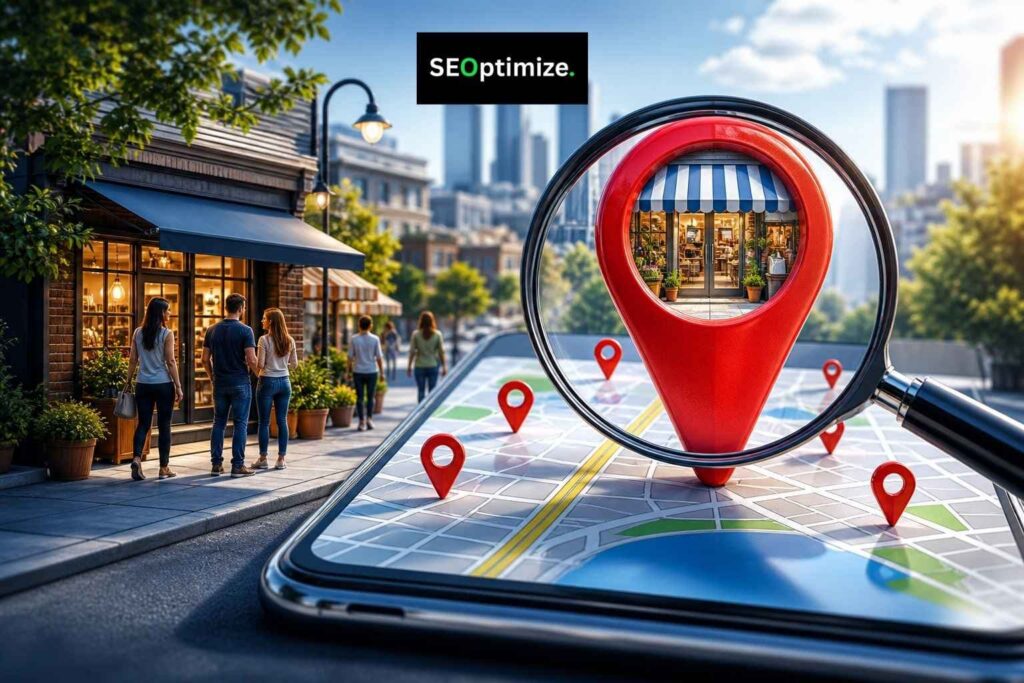
Nearly half of all Google searches have local intent. Your next customer isn’t browsing aimlessly. They have a problem, they are on their phone, and they’re going to call whoever shows up first in those results.
At SEOptimize, we help local service businesses turn Google into a predictable lead engine. Not with long contracts that deliver everything to customers, but with the fundamentals that actually generate calls.
This article gives you the full picture on why local SEO matters, backed by real data, with practical context for what each reason means for a service business like yours.
Specifically, you’ll find answers to:
- Why local SEO isn’t the same game as traditional SEO
- What makes near-me searches so valuable and so unforgiving
- How your Google Business Profile, reviews, and citations work together
- Why local SEO compounds while paid ads reset
- And why, right now, is still the right time to move
With that said, let’s dive into the nine reasons why local SEO is important for your business.
Key Takeaways
- 46% of all Google searches have local intent. Your next customer is already searching. The only question is whether your business shows up in that search.
- Local SEO narrows the competition to your city or service area, making front-page visibility realistic for businesses that traditional SEO has always felt out of reach for.
- 88% of mobile local searches convert to a call or visit within 24 hours. This is buying behavior, not browsing.
- Your Google Business Profile influences all three of Google’s local ranking signals. Most businesses aren’t using it correctly.
- Reviews are a direct ranking signal, not just social proof. Velocity, recency, and response habits all affect local placement.
- 58% of businesses have not meaningfully optimized their local presence. That gap is your opportunity.
- Local SEO builds a compounding asset. Every review, citation, and ranking month keeps adding to your visibility long after the work is done.
Reason #1: Your Customers Are Already Searching Locally
Start here, because everything else in local SEO flows from this single reality.
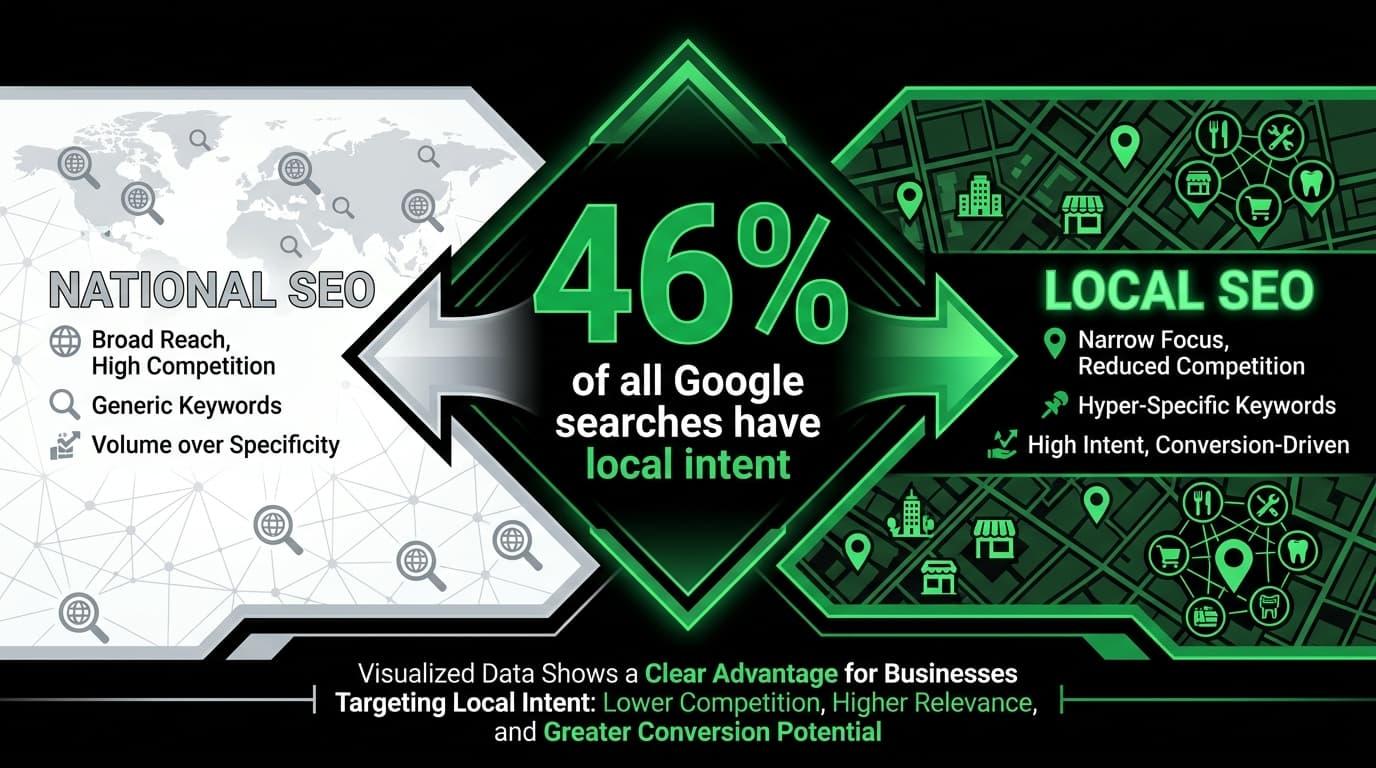
46% of all Google searches are looking for local information.
That isn’t a niche behavior. That’s the default behavior of your market. Every day, people in your city are typing your service category into Google with a location attached, and calling the first business that appears.
Local SEO is how you become that business. And unlike traditional SEO where you’re competing against thousands of websites nationally, local SEO narrows the playing field to your city or service area. That narrower competition makes front-page visibility achievable, and more importantly, it puts you in front of people who are ready to hire today.
Reason #2: Local Search Is Buying Behavior, Not Browsing Behavior
This is why local SEO has such a direct connection to revenue, and why it matters more than most business owners expect.
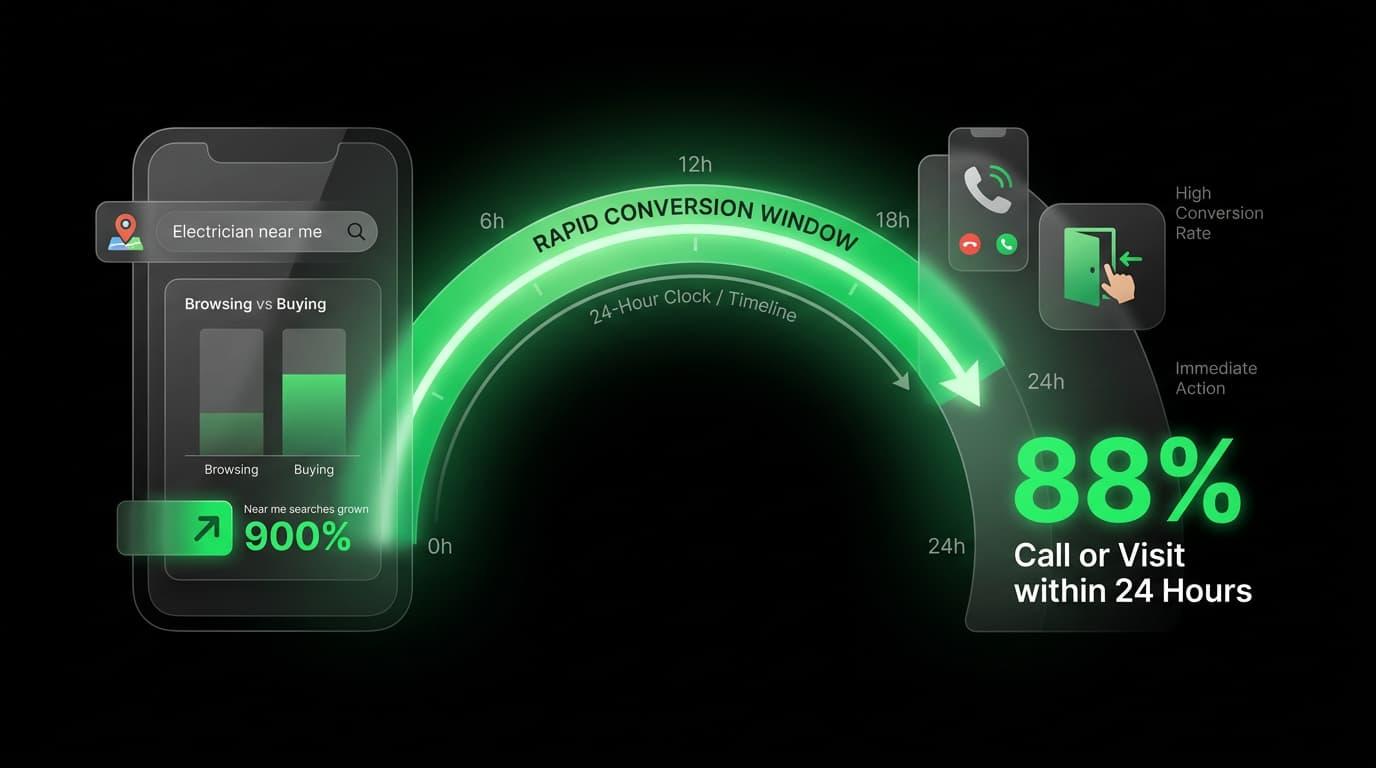
88% of mobile searches for local businesses result in a call or visit within 24 hours.
Someone searching “electrician near me” or “cleaning service in [city]” isn’t researching options for next month. They have a problem right now, and they’ll call whoever shows up first.
“Near me” searches have grown by more than 900% over recent years, concentrated in the service categories in which local businesses operate.
The practical implication is unforgiving: If your business doesn’t appear in the local pack at that moment, the lead goes to whoever does. The customer books, moves on, and you never knew the opportunity existed.
Reason #3: 42% of Local Searchers Click on the Local Pack
Understanding where clicks actually go is what makes local SEO feel urgent rather than optional.
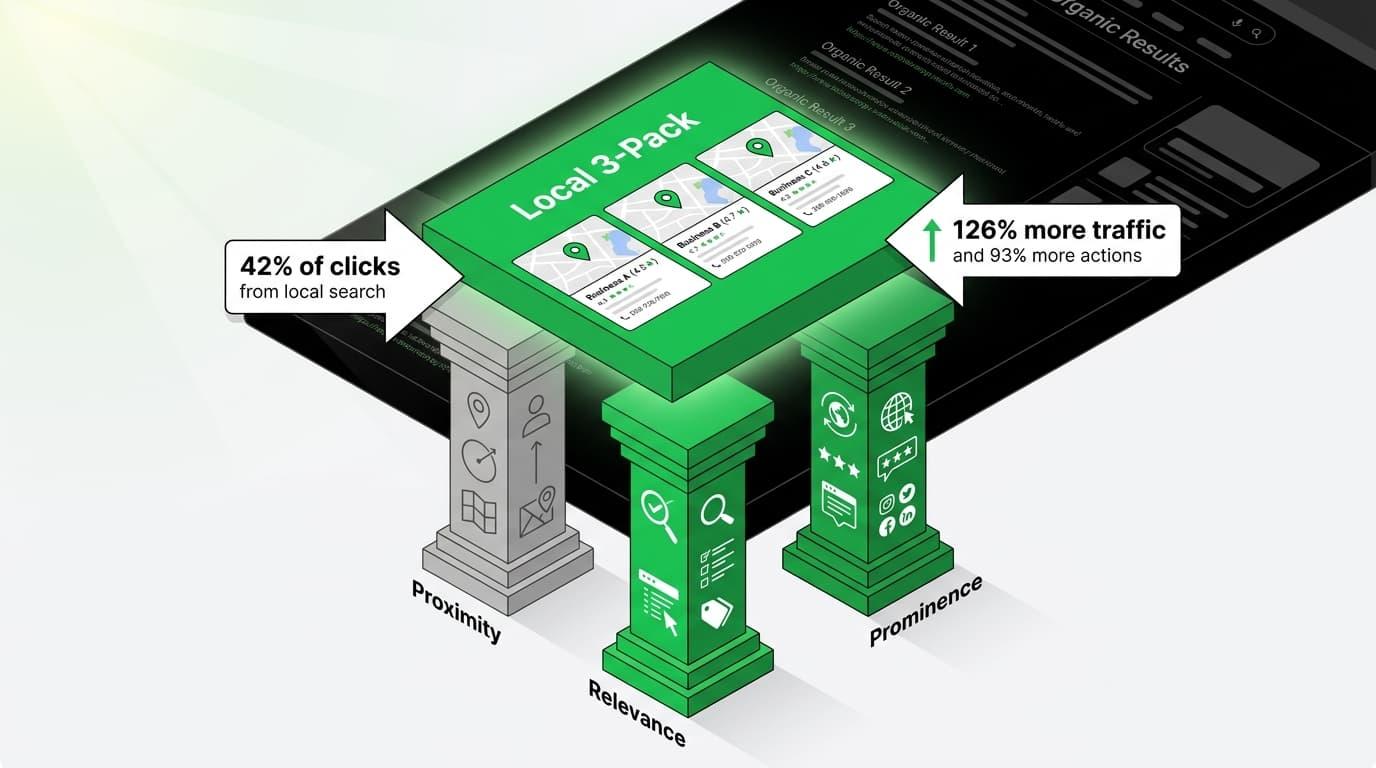
42% of local searches involve clicks on the Google Maps Pack. Businesses in the local 3-pack receive 126% more traffic and 93% more actions, including calls and website clicks, compared to businesses ranked in positions 4 through 10.
The local pack is the three-business block of map-based results that appears above standard organic listings when someone searches for a local service. Winning placement there is the central goal of any serious local SEO strategy.
That placement is determined by three signals Google applies to every local business: proximity, relevance, and prominence.
You can’t control proximity. You can deliberately build relevance and prominence, which is exactly what local SEO does.
“Local SEO is the most important play right now for local businesses. The search results aren’t changing and the old rules still apply today. It’s just as easy to do today as it was three years ago – and it’s even more powerful. If a customer is in need of your service today and you’re not showing up for it, you’re leaving money on the table. To me, that’s the biggest mistake local business owners are making right now.”
Nathan Smith, CEO and Founder of SEOptimize
This is exactly the gap SEOptimize was built to close. We audit your Google Business Profile, citation footprint, and on-page relevance signals to identify exactly why your business isn’t showing up in the local pack and what it will take to fix it.
Every client engagement starts with a no-fluff audit that shows you where you stand and what the path to the top 3 looks like in your specific market.
We keep a maximum of 20 clients at a time because this work requires real attention, not a templated report. If you want to know what it takes to get your business into the local pack, that conversation starts with a free audit.
Reason #4: Your Google Business Profile Is a Lead Generation Asset
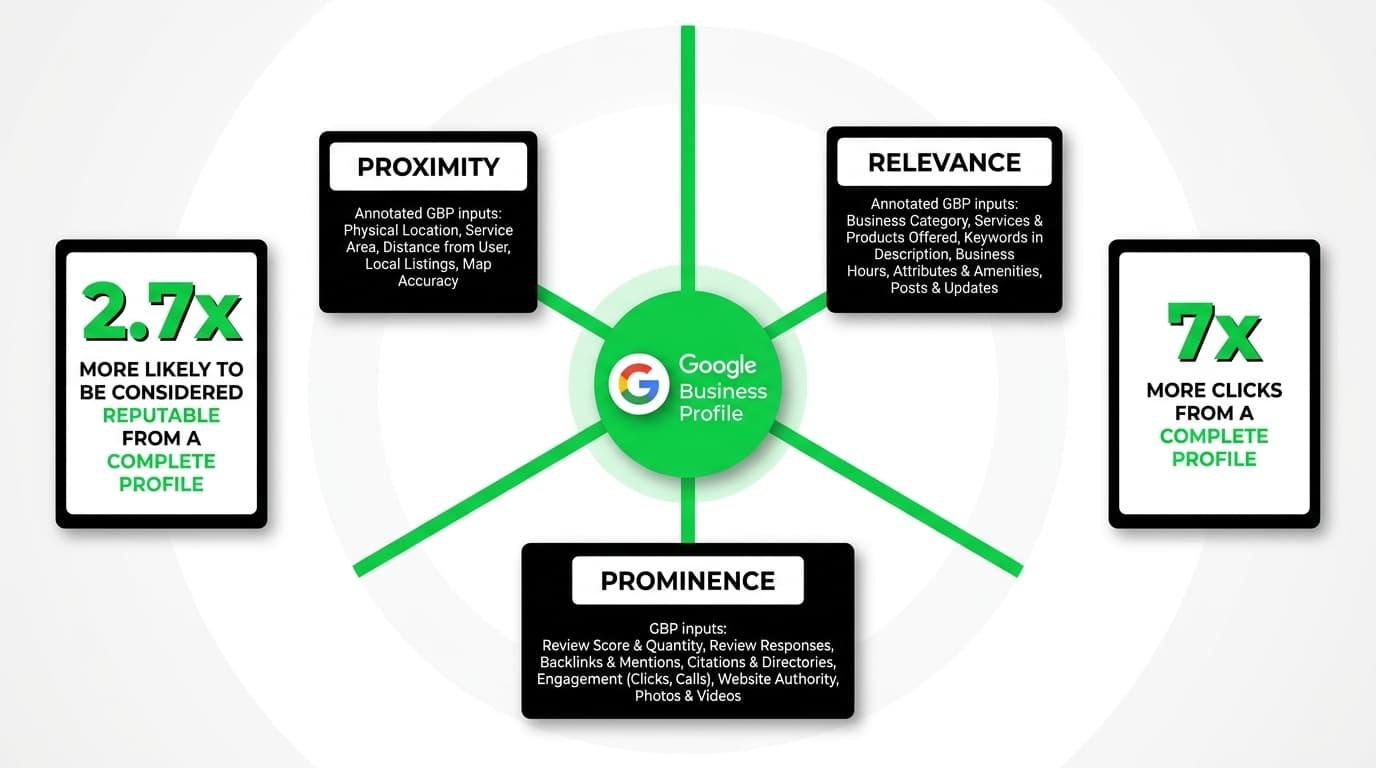
Of all the things that drive local search visibility, this one asset does more heavy lifting than anything else.
Customers are 2.7 times more likely to consider a business reputable if they find a complete Business Profile on Google Search and Maps. Complete profiles also receive 7 times as many clicks as incomplete ones.
Your Google Business Profile (GBP) is the listing that appears in the local pack and on Google Maps. It’s what puts your business in front of searchers at the exact moment they are ready to act, but most businesses aren’t using it correctly.
A fully optimized GBP influences all three of Google’s local ranking signals at once:
- Proximity: Accurate service area definition ensures Google matches your listing to the right geographic searches.
- Relevance: The categories you select, the description you write, and the services you list shape your match quality for relevant queries.
- Prominence: Review activity, posting consistency, and NAP consistency across the web all feed this signal directly.
You don’t need a physical storefront to benefit from a GBP. Service-area businesses, including plumbers, home cleaners, landscapers, and consultants, can rank prominently in local results without a public address. You define your service area, and Google uses that to match you to nearby searches.
Reason #5: NAP Consistency Directly Affects Your Rankings
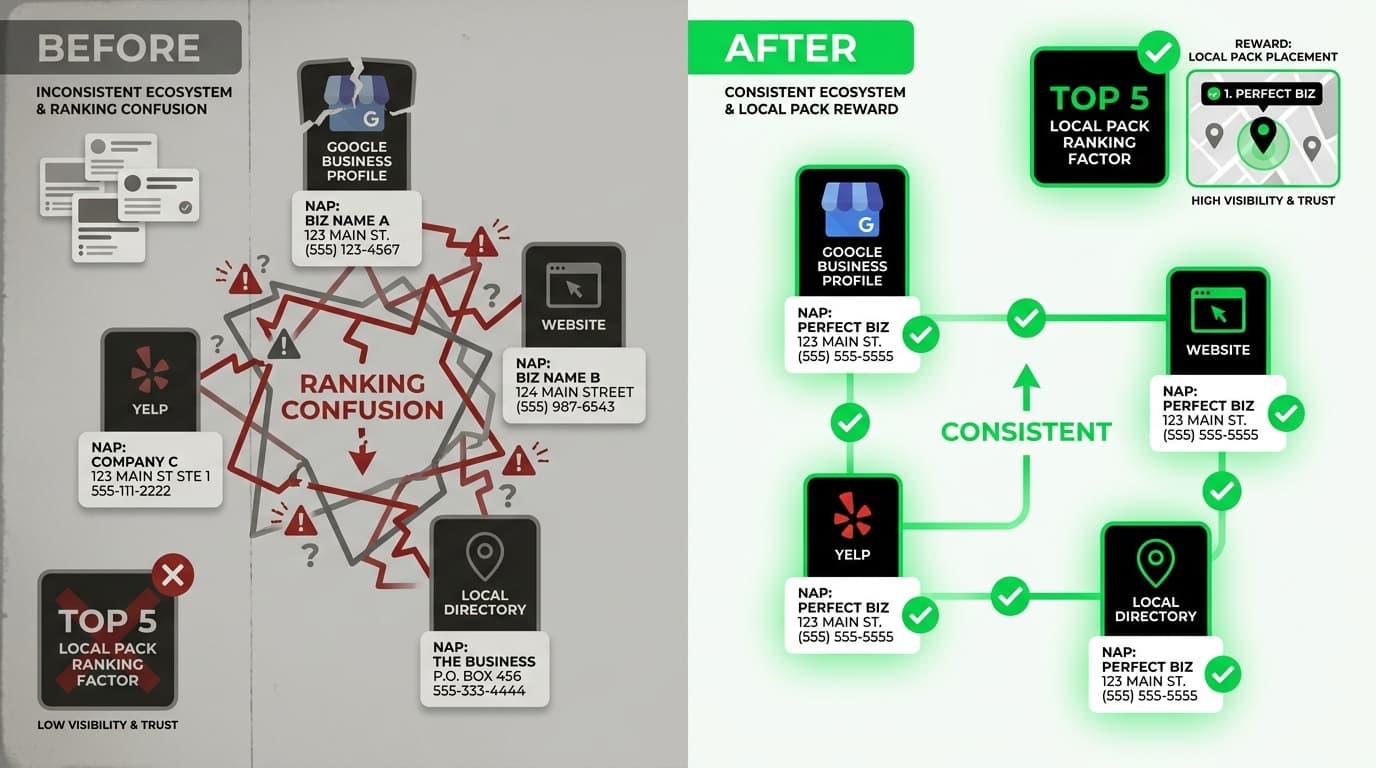
This is one of the most common issues in local SEO audits, and one of the easiest to fix once you know it exists.
NAP stands for name, address, and phone number. Google cross-references your business information across every platform where your business is listed: your GBP, your website, Yelp, local online directories, local business listings, and dozens of other citation sources. When that information is even slightly inconsistent, it creates ranking confusion that suppresses your local visibility.
NAP consistency is one of the top 5 factors for local pack rankings on Google Maps, according to the annual survey of local SEO experts. Accurate local listings and business listings also help search engines trust your business information.
An abbreviated street name on one platform and a fully spelled-out version on another. An old phone number is still listed in a directory you forgot about. These small discrepancies send conflicting signals, costing you rankings as a result.
Fixing NAP inconsistencies is unglamorous work. It also means cleaning up citations across online directories. It delivers measurable ranking improvements and is one of the first things SEOptimize addresses in every new client audit.
Reason #6: Reviews Are a Ranking Signal, Not Just Reputation
Most business owners know reviews matter for credibility, but fewer realize they also directly affect rankings and support reputation management in local results.
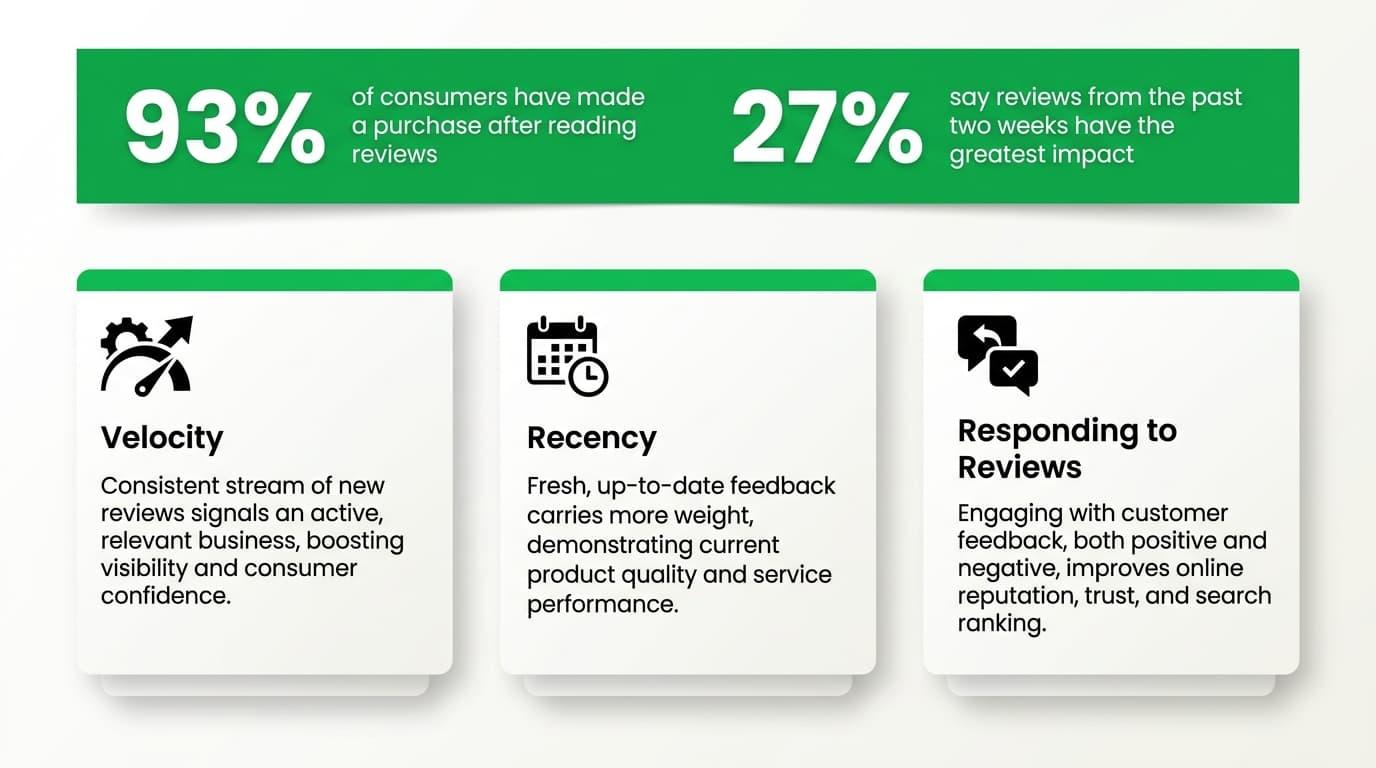
93% of consumers have made a purchase after reading reviews. The average consumer reads multiple reviews before trusting a local business, and 75% regularly check reviews before choosing a business.
Google’s prominence signal rewards businesses that are well-known and trusted across the web. A strong review profile tells Google that real customers have engaged with your business and found it worth recommending. online reviews and positive reviews act as trust signals that can increase your business’s visibility. More positive, recent reviews consistently correlate with stronger local pack placement.
Three things matter more than most business owners realize:
- Velocity matters more than total volume alone. A steady stream of new reviews signals an active, relevant business. A one-time burst followed by months of silence carries far less weight.
- Responding to reviews signals active management. It shows potential customers your business is attentive and accountable, supports reputation management, and signals to Google that your listing is being maintained.
- Recency counts. According to the same BrightLocal survey, 27% of consumers say reviews written in the past two weeks have the greatest impact on their decisions. Review generation needs to be an ongoing system, not a one-off campaign.
Your review profile is a ranking asset and a conversion rate factor working simultaneously. Both matter.
At SEOptimize, review generation is built into every client engagement, not treated as an afterthought.
We help you build a simple, repeatable process for earning new reviews after every job, whether that is a post-service text, an email follow-up, or a direct link you hand to customers at the door.
We also monitor and respond to reviews on your behalf so your profile stays active, your prominence signals keep compounding month over month, and stronger trust helps earn more customers. The businesses in our portfolio that commit to this system consistently see lead volume increases within the first 60 days, without changing anything else.
Reason #7: 58% of Your Competitors Have Not Optimized for Local Search
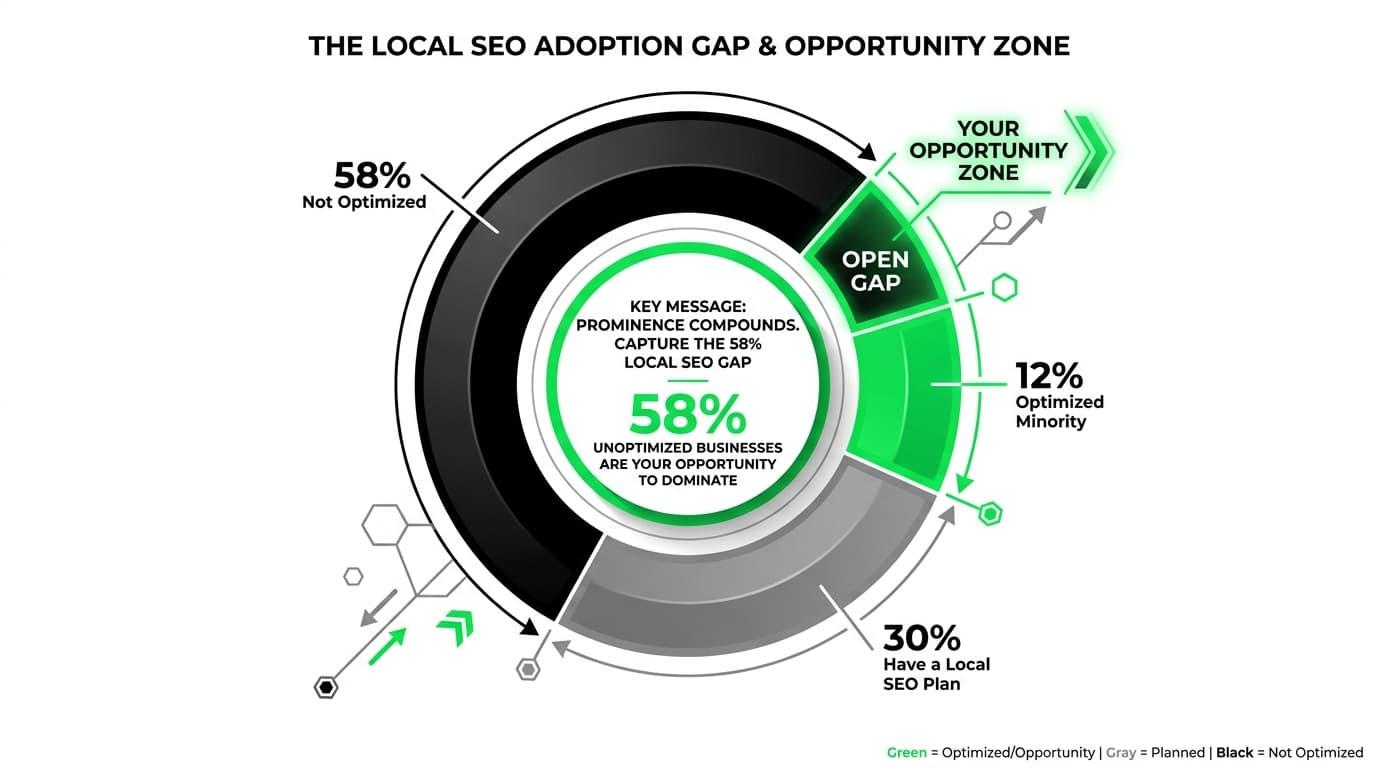
This is the strategic reality that makes right now the right time to invest.
58% of businesses don’t optimize for local search, and only 30% have a local SEO plan in place.
That isn’t a saturation problem; it’s an opening. Local SEO gives you a competitive edge over other local businesses that haven’t claimed this ground, and they’re losing leads every day because of it.
Businesses that invest early build citation depth, review volume, and ranking history that competitors cannot replicate quickly. Prominence doesn’t spike overnight. It compounds. By the time a competitor decides to get serious about local SEO, the businesses that moved first have already built a gap that takes real time and effort to close.
The question isn’t whether local SEO works. The question is whether you move first and widen your local search rankings advantage before competitors can close the gap.
Reason #8: Local SEO Builds a Compounding Asset, Not a Rented Audience
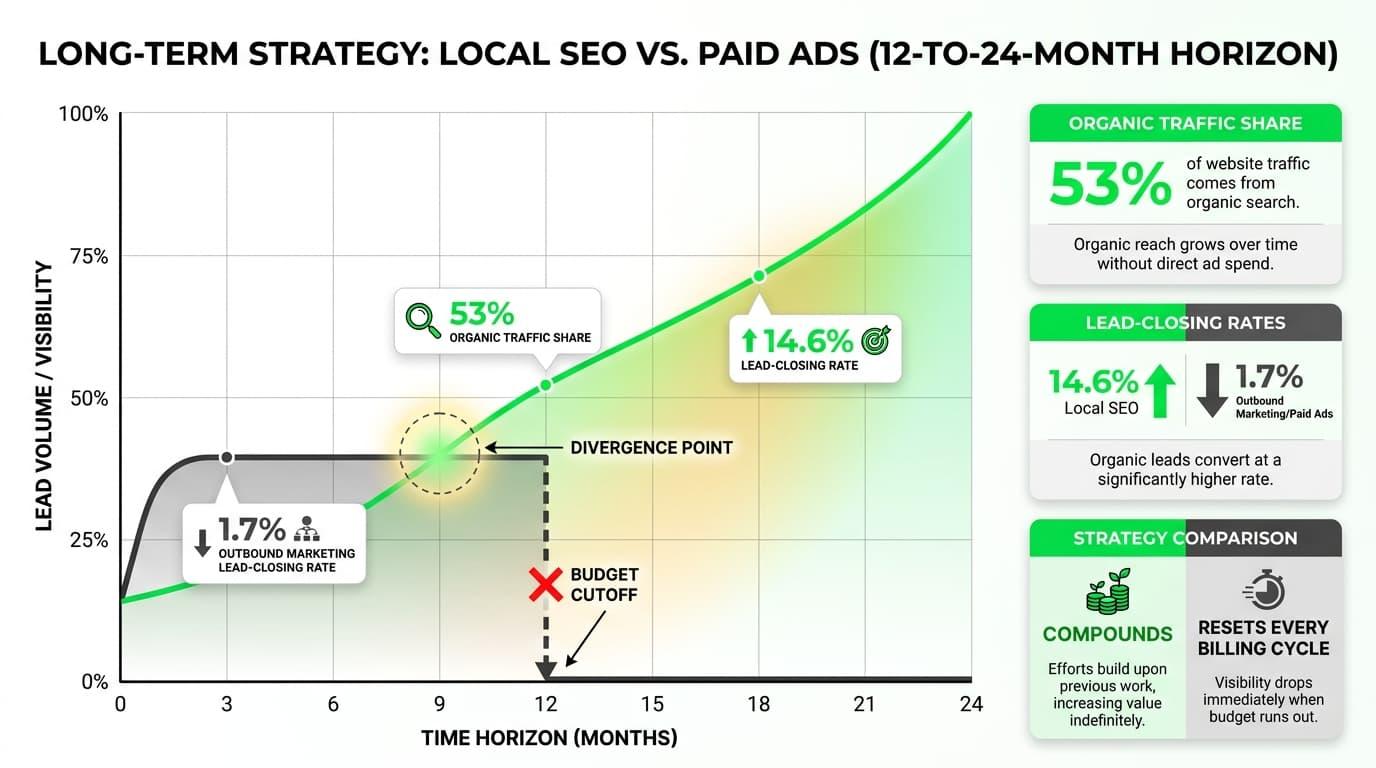
This is the comparison that matters most when deciding where to allocate your marketing budget.
Paid ads stop generating leads the moment you stop paying. Local SEO works in the opposite direction. Over time, local seo helps build online visibility and attract relevant traffic, unlike traditional marketing methods that reset when the spend stops. Every review you earn, every citation you build, and every month of ranking history you accumulate add to an asset that keeps generating leads without a recurring cost.
Organic search drives 53% of all website traffic and has a lead-closing rate of 14.6%, compared to 1.7% for outbound marketing such as print ads and cold calls, making it a more efficient channel than traditional marketing methods.
The cost-per-lead from local SEO consistently decreases over a 12-to-24-month horizon as authority grows. Paid channels reset every billing cycle. Local SEO compounds.
That compounding effect matters most for service businesses with recurring demand. HVAC companies, cleaning services, landscapers, and contractors are not chasing one-time buyers. They need consistent inbound volume across seasonal swings. Local SEO supports business growth by increasing web traffic from high-intent local searchers because the signals that drive rankings do not expire. They strengthen.
Reason #9: It Works Without a Storefront, for Any Service Business
This is the reason most service-area and service based businesses leave local SEO on the table. It’s based on a misconception worth clearing up directly.
Local SEO isn’t just for businesses with a walk-in location. Plumbers, electricians, landscapers, home cleaners, HVAC companies, and contractors can all rank prominently in local search results without displaying a public address. The strategy adapts to how your business actually operates, and this local SEO work applies wherever your business operates within a defined local area.
Here’s what local SEO looks like for a service-area business:
- You define your service area in your Google Business Profile instead of displaying a storefront address.
- Google uses that service area definition to match your listing to searches happening within it.
- Your website and GBP are optimized with local keywords for the cities, neighborhoods, and zip codes you actually serve.
- Every citation, review, and backlink builds prominence signals in those specific areas.
This approach helps attract local traffic from people searching for local services.
If you serve customers in a defined geographic region and your revenue depends on inbound leads, local SEO applies to your business in exactly the same way it applies to a restaurant or a retail shop. The playbook just looks slightly different, and it’s one SEOptimize builds for service-area businesses every day.
So, Why Does Local SEO Matter?
Here’s the TLDR version.
Local search isn’t a future trend you need to prepare for. It’s happening right now, and the businesses showing up in those results are capturing leads their invisible competitors never knew existed. The 58% adoption gap means most of your market hasn’t claimed this ground. The compounding nature of local SEO means the businesses that move first build a lead advantage that takes real time to close.
To recap:
- Your customers are already searching locally, and 46% of all Google searches have local intent.
- Local search is a buying behavior, with 88% of mobile searches converting within 24 hours.
- 42% of local searchers click the local pack, and businesses in the top 3 get 126% more traffic.
- Your Google Business Profile is a lead-generation asset that influences all three ranking signals simultaneously.
- NAP consistency directly affects where Google ranks your business in local results.
- Reviews are both a ranking signal and a conversion driver.
- 58% of your competitors have not optimized for local search, and that window is still open.
- Local SEO builds a compounding asset while paid ads reset every billing cycle.
- It works for service-area businesses without a storefront, not just brick-and-mortar locations.
Final Thoughts
Local SEO is important because consistent work improves search rankings and online visibility over time. The businesses showing up in your city’s local pack right now aren’t there by accident.
Local SEO ensures your business appears when potential customers search in your area. They built the right signals, in the right order, over time, and they’re collecting the calls that would have gone to you.
The good news is that 58% of your competitors haven’t done any of this yet. The window is still open.
At SEOptimize, we help local service businesses close that gap. We handle the GBP optimization, citation cleanup, review systems, on-page SEO, and on-page relevance so you can focus on running your business. No bloated retainers. No vanity reports. Just the work that moves you up in local search and keeps you there.
We only take on 20 clients at a time. If you want to see what local SEO looks like for your specific market, the first conversation is free.
Frequently Asked Questions
Still have questions? Here are the ones we hear most often from local service business owners evaluating whether local SEO is the right move.
Is local SEO worth it for small businesses?
Yes, and the benefits of local SEO for small businesses are strongest when it helps attract local customers and win more local clients. Local SEO focuses on reaching a defined local audience rather than a broad market.
Local SEO builds an asset that compounds over time: every review, citation, and ranking month adds to visibility that doesn’t disappear when a budget runs out. For businesses with defined service areas and recurring demand, the cost-per-lead decreases as authority grows, making it one of the most efficient long-term growth channels available.
How long does it take local SEO to show results?
Most local SEO campaigns show measurable improvements in GBP visibility within 60 to 90 days, and keyword research plus relevant keywords often shape how quickly local SEO efforts improve visibility.
Meaningful increases in lead volume are typically visible in months four through six. Tracking local SEO success means watching search queries and local search rankings over time. According to Ahrefs research on SEO timelines, most profiles and pages take three to six months to reach their full ranking potential.
Do I need a physical storefront to benefit from local SEO?
No. Local search engine optimization can work even without a storefront or public address. You define your service area in your Google Business Profile, and your business’s location and service area help search engine optimization systems understand where to show you in nearby searches.
If your customers are local and your revenue depends on inbound leads, local SEO applies directly to your business. This is especially effective for attracting customers in the local community.
What is the single most important thing I can do for local SEO right now?
Fully optimize and verify your Google Business Profile as part of an effective local SEO strategy. An optimized local SEO strategy also depends on internal linking and locally relevant content on your website. This one asset influences all three of Google’s local ranking signals.
Most profiles we audit at SEOptimize are incomplete in at least three critical areas, and fixing them alone produces measurable visibility improvements within 60 days, though effective local SEO also requires maintaining local business signals beyond the profile itself.
How is local SEO different from running Google Ads for local searches?
Google Ads delivers immediate visibility, but unlike national SEO, which targets broader audiences, local SEO focuses on a nearby target audience and keeps working after your budget runs out. Local SEO builds compounding authority that keeps generating leads without a per-click cost, and local SEO puts your business on search engine results pages, including organic search results and the local pack. The businesses that win in the long term use both: ads for immediate demand capture, while local SEO builds the sustained inbound pipeline that keeps cost-per-lead from declining over time. It can also use local events and local organizations to strengthen visibility with nearby customers.