Every few months, a new headline declares that SEO is finished. At SEOptimize, we’ve seen this cycle before: a major update or new feature lands, and suddenly everyone is posting hot takes about the “end” of search as we know it.
Now, with AI Overviews and other AI-driven answer boxes reshaping search results and zero-click searches becoming the norm, the question “Is SEO dead?” feels more urgent than ever.
If Google is answering questions before users even visit a website, what does that mean for local businesses trying to compete? It’s a fair concern, and it deserves a straightforward answer.
The reality, though, is more layered than a simple yes-or-no, and where you land depends heavily on how you use local SEO for your business.
In this article, we’ll look beyond the headlines, digging deeper into:
- What has actually changed in how Google handles local searches.
- What still works right now in local SEO (and what to stop wasting time on).
- Where local businesses should focus if they want to keep winning in search.
Local SEO Isn’t Dead, but the Playbook Has Changed
Local SEO is not dead. It’s merely evolved, and the businesses that haven’t kept up are the ones feeling the pain of that shift.
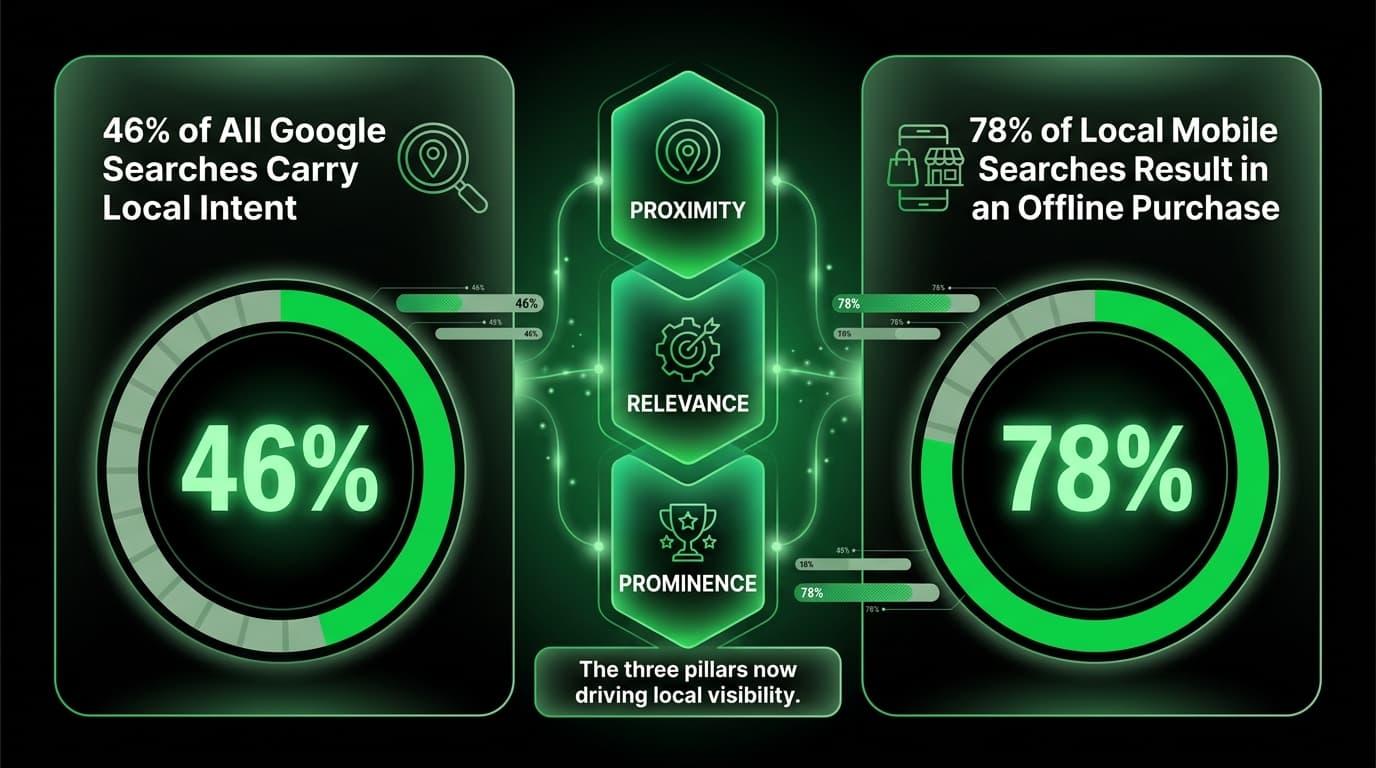
The numbers are hard to argue with. According to local SEO statistics, 46% of all Google searches carry local intent, and 78% of local mobile searches result in an offline purchase. That’s not a channel in decline; that’s a channel with serious commercial weight behind it.
So what, exactly, has changed about local search?
What changed is how Google surfaces local results. The local pack, Google Maps rankings, and Google Business Profile signals now carry more influence than they did five years ago. Traditional blue-link rankings still matter, but they’re no longer the whole picture.
Businesses that relied solely on website rankings without strengthening their local presence began to lose ground. That slow slide was what created the impression that local SEO stopped working.
It didn’t stop working, though. Only the rules changed, not the opportunity in front of you. Proximity, relevance, and prominence now drive visibility in ways that older tactics cannot.
Why So Many People Think Local SEO Is Dead
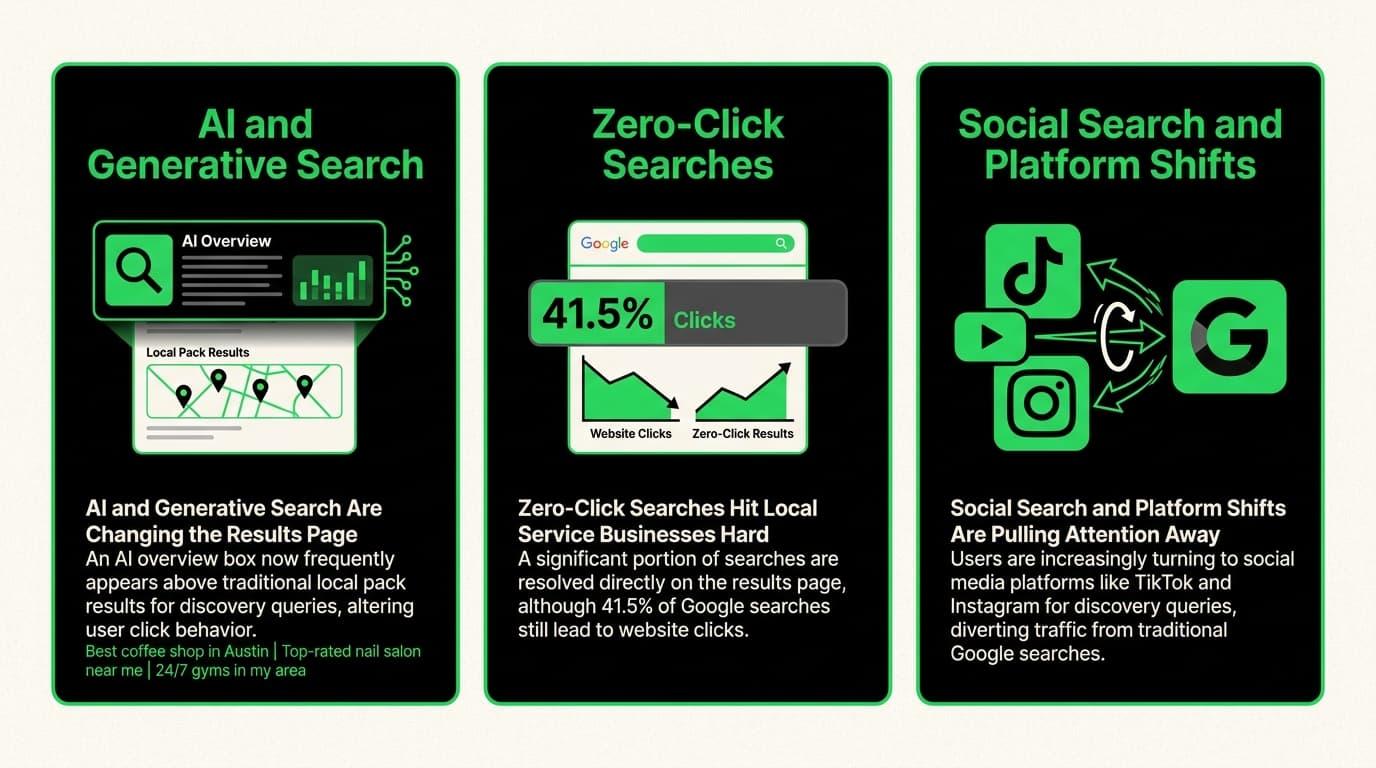
The skepticism around local SEO isn’t coming out of thin air. There are real, visible changes happening in search that have left many business owners questioning whether the channel still delivers. Three shifts in particular are driving most of that doubt.
AI and Generative Search Are Changing the Results Page
AI Overviews now appear at the top of many search results, above the local pack, maps, and organic listings. When someone searches “best plumber near me” or “emergency HVAC repair,” they may see a generated answer before they ever see a business name. ChatGPT and similar tools are also now pulling users away from Google entirely for certain queries. AI tools rely heavily on existing web content for answers.
That’s a real shift, and it’s visible enough that business owners are noticing.
Zero-Click Searches Hit Local Service Businesses Hard
Zero-click searches happen when Google answers a query directly on the results page, and the user never clicks through to any website. For informational searches, this has been a growing trend for years. But not every search ends without a visit, and about 41.5% of Google searches still lead to website clicks.
As a business owner in the service industry, you might be feeling it differently.
For example, when a user searches for business hours, a phone number, or a quick “how much does X cost” question, Google often surfaces that answer from a Business Profile or through featured snippets, and the visit never happens. This is part of the broader conversation around why people say SEO is dying, and it’s not an unfounded concern.
Social Search and Platform Shifts Are Pulling Attention Away
Younger audiences are increasingly using TikTok and Instagram to find local recommendations. For instance, queries like the ones below used to happen mostly on Google Search:
- Best coffee shop in Austin
- Top-rated nail salon near me
- 24/7 gyms in my area
Now, a growing share of those discovery moments is happening inside social platforms, not just on Google. This doesn’t mean local SEO has lost its value, but it does mean attention is spreading across more surfaces than before.
These are legitimate shifts, and dismissing them would be dishonest. So, with this realization, the question isn’t whether the landscape changed; it’s whether local SEO still delivers results despite those changes.
What the Data Actually Shows About Local Search
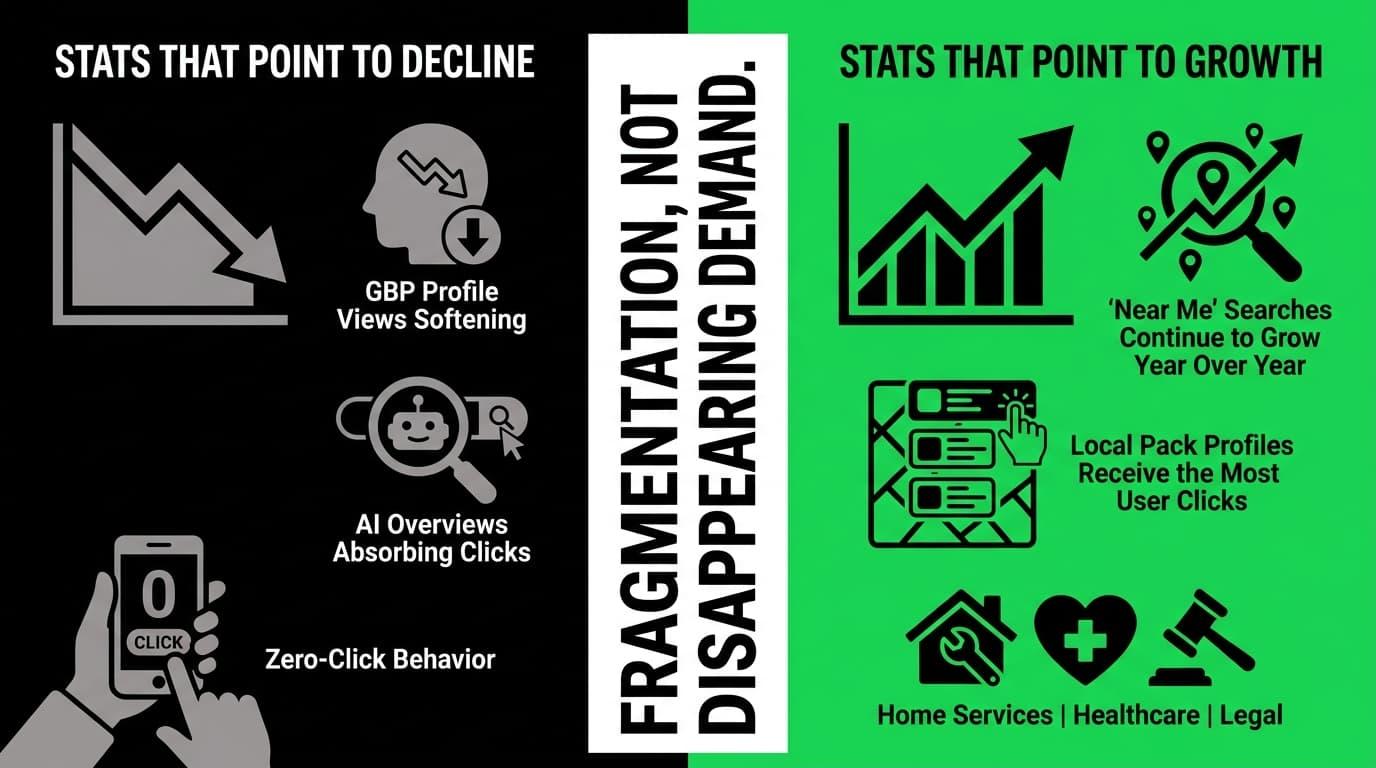
The honest answer to whether local SEO is dead lives in the data. Depending on which study you read, the data points in two different directions at once, and both deserve a fair look.
The Stats That Point to Decline
Some reports show measurable declines in Google Business Profile views and direct search engine visits. Businesses that once relied on consistent profile traffic are seeing those numbers soften.
Part of this relates to AI Overviews absorbing clicks before users ever reach a listing, and part reflects zero-click behavior, where Google surfaces a phone number or address without requiring any further action from the user.
The state of local SEO in 2026 report highlights this tension directly. The report notes that profile engagement metrics have shifted as search algorithms change, making traditional benchmarks harder to interpret.
Review velocity, once a reliable signal of business momentum, is also becoming harder to sustain as consumer behavior spreads out across platforms, even though potential customers often check reviews before making purchasing decisions.
The Stats That Point to Growth
At the same time, local search impressions are still climbing, and google’s local pack remains one of the primary visibility surfaces in those results. “Near me” searches continue to grow year over year, and consumer user intent to find local services hasn’t disappeared. According to local SEO data points compiled from multiple sources, local search volume remains strong across high-intent categories such as home services, healthcare, and legal.
Profiles in Google’s Local Pack receive the most user clicks, which is why placement there still matters for visibility with most users.
So which story is true? Both.
The tension between declining profile visits and growing search impressions reflects local search fragmentation, not disappearing demand. Consumers are still searching. They’re just finding answers in different ways than before.
Google Maps, AI-generated responses, social platforms, and voice search are all absorbing queries that used to flow through a single channel. That’s a structural shift, not a death sentence.
How Local SEO Has Evolved and What That Means for Your Business
Local SEO didn’t disappear. It only got more complex, and the businesses that treat it as if it’s still 2018 are the ones struggling. As you must have also noticed, the results page looks fundamentally different today than it did five years ago.
Understanding that shift is the first step to making local SEO work for you again.
Google Business Profile Is Now the Front Door, Not a Bonus
Optimizing a Google Business Profile is no longer something businesses can set up once and forget about. Today, GBP drives calls, direction requests, and bookings directly from the search results page, often before a user ever visits your website. It’s the first thing a potential customer sees, and one of the most powerful tools for reaching local customers.
Strong placement in Google’s Local Pack helps attract nearby customers and can increase foot traffic.
A well-optimized profile with accurate categories, updated hours, photos, and active review management now functions as a standalone conversion surface. Treating it as a secondary asset means leaving real leads on the table.
AI Overviews and Generative Engine Optimization for Local Search
AI Overviews are changing, which businesses get seen first. Google’s AI-generated responses pull from structured, authoritative local signals, and businesses already optimized for traditional local SEO tend to appear in these results more consistently.
This evolution is where Generative Engine Optimization becomes relevant. GEO means structuring your content, profiles, and business data so that AI systems can confidently cite your business as a relevant answer, drawing on high quality content and clear business data when selecting sources. It’s not a replacement for local SEO; it’s an extension of it. Businesses that build clear, consistent, and well-structured local signals are better positioned to appear in both traditional results and AI-generated responses.
To understand how local search works in this new environment, it helps to see traditional SEO and GEO as complementary strategies rather than competing ones.
Local SEO Signals That Still Drive Rankings in 2026
According to Google’s local ranking factors, the foundational signals behind strong local search rankings haven’t been retired. They’ve been reinforced. The following signals continue to carry real weight:
| Signal | Why It Still Matters |
|---|---|
| NAP (name, address, and phone number) consistency | Matching name, address, and phone number across all directories builds local authority |
| Schema markup | Helps search engines and AI systems understand your business type, location, and services |
| Review velocity | The pace and recency of incoming reviews signal an active, credible business. |
What is dead is the old playbook of keyword-stuffed landing pages, low quality content, and thin pages with no supporting trust signals. Modern local visibility now relies on structured data, consistent business information, and a smarter approach to keywords built around local relevance signals instead of stuffing.
The businesses winning in local search right now aren’t doing anything extraordinary. They’re doing the fundamentals correctly and consistently.
Local Search Is No Longer Just Google
Most local SEO conversations start and end with Google. That’s understandable, but it’s also an incomplete picture. The future of local SEO points toward a more fragmented discovery landscape, and businesses that only optimize for one platform are leaving real visibility on the table.
Apple Maps, Bing Places, and Yelp Are Capturing Real Search Volume
Each of these platforms serves a distinct audience that Google alone doesn’t fully reach:
- Apple Maps: The default for iPhone users, a demographic that skews toward higher household income and consistent local spending.
- Bing Places: Reaches older demographics and desktop searchers who represent a separate, often overlooked segment.
- Yelp: This platform remains a primary discovery tool in categories like restaurants, home services, and healthcare, where users arrive with strong purchase intent.
You may be wondering, how does visibility on these platforms actually drive more customers?
These aren’t just “Google alternatives”. They’re separate discovery surfaces with their own audiences. Businesses visible across all three have a compounding advantage over competitors who appear only in one place, which can also enhance visibility across the broader digital landscape.
NAP consistency across all platforms is becoming a stronger trust signal. Inconsistencies don’t just confuse users; they create conflicting data that weakens your local authority as a whole. That broader presence supports a more holistic approach to local discovery, not just a single-listing tactic.
Voice Search and AI Assistants Are Reshaping Local Discovery
According to local consumer search behavior trends, voice search queries from mobile friendly devices often skew heavily toward local discovery habits and results. “Near me” phrases dominate the questions people ask Siri, Alexa, and the Google Assistant.
Mobile first indexing and site speed still matter because voice and local users expect fast, usable mobile experiences.
These assistants pull from multiple data sources, not just Google’s index, which means your presence on Apple Maps and Bing Places directly affects whether voice search surfaces your business.
Local search fragmentation isn’t just a future concern. It’s already shaping how customers find businesses today.
What Local Businesses Should Actually Prioritize Right Now
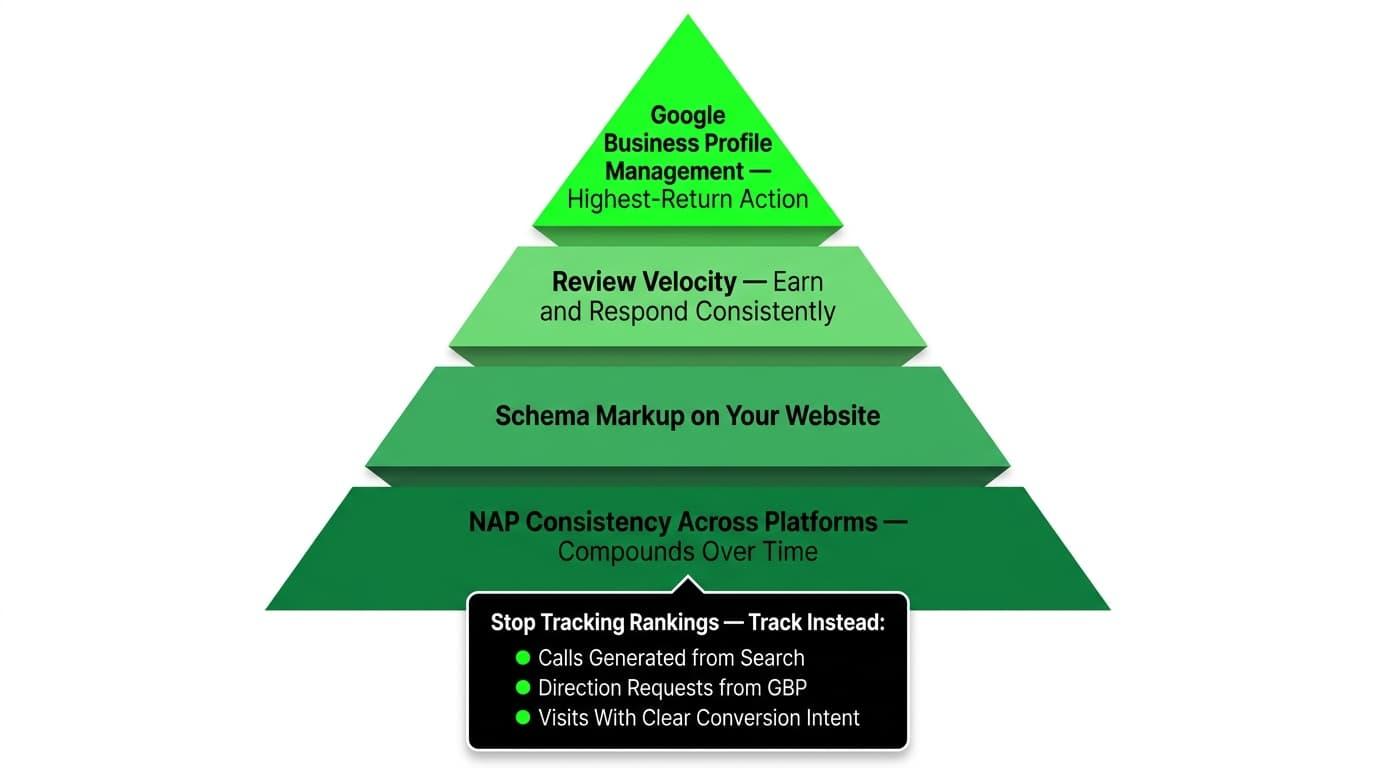
Local SEO remains a crucial strategy, even though the landscape has shifted. Thriving with local SEO requires focusing on the right things instead of chasing signals that no longer move the needle.
As covered in how local SEO changed in 2026, the businesses gaining ground are the ones showing up consistently across platforms, earning trust signals, and measuring outcomes that connect directly to revenue, because local SEO continues to work when supported by a clear SEO strategy.
Here’s where you should focus your efforts right now, including some of the most effective ways to boost local SEO:
- Google Business Profile Management: This is the highest-return action available to any local business right now. Actively keeping hours accurate, adding photos, and responding to reviews is no longer optional. Better profile management can also boost visibility and improve how your business appears in Google’s Local Pack.
- NAP Consistency Across Platforms: Inconsistent business information across Google, Apple Maps, Bing Places, and Yelp creates conflicting signals that quietly erode your local authority. Getting this right is boring, behind-the-scenes work, but it compounds over time.
- Review Velocity: It’s not about accumulating a large total count. Consistently earning reviews and responding to them signals an active, credible business to both algorithms and the people reading them.
- Schema Markup on Your Website: Structuring your site with schema helps AI systems and search engines accurately understand what your business does, where you operate, and who you serve. It can also support website discovery and organic traffic. As AI-generated results absorb more of the results page, this becomes a clearer path to visibility.
One more shift worth making: Stop tracking rankings as a primary success metric. The numbers that actually matter are calls generated from search, direction requests from your Google Business Profile, and visits from users with clear conversion intent. Those are the figures that connect directly to revenue.
Common Questions About Local SEO Today
Does local SEO still work in 2026?
Yes. What stopped working are the outdated tactics, not local SEO itself. Keyword-stuffed pages and neglected Google Business Profiles no longer move the needle, but businesses investing in user focused content, consistent local signals, accurate listings, and genuine reviews are still generating real leads from search.
Is doing local SEO worth it for small businesses?
For local service businesses, it remains one of the highest-return digital channels available. The intent behind local searches is commercial and immediate, so showing up at that moment helps you rank for high-intent local searches and generate qualified leads. Someone searching for a plumber or a dentist nearby is not browsing. They’re ready to act, and showing up at that moment has a direct impact on revenue.
How long does it take to see results from local SEO?
Local SEO timelines vary, but most businesses start seeing meaningful movement in calls, directions, and profile views within 3–6 months of consistent effort, with compounding gains as reviews and signals build.
Will AI replace local SEO entirely?
AI Overviews change how results are surfaced, not whether people search with local intent. If anything, businesses already optimized for local SEO tend to appear more consistently in AI-generated responses. Generative Engine Optimization builds on the same structured, trustworthy signals that local SEO has always rewarded, so the two approaches reinforce each other rather than compete.
Can I manage local SEO myself, or do I need an agency?
Many basics, such as updating your Google Business Profile, maintaining NAP consistency, asking for reviews, and handling keyword research, can be done in-house, while agencies like SEOptimize help with strategy, structure, and ongoing optimization when time or expertise is limited.
What is the future of local SEO?
It’s multi-platform, AI-aware, and shaped by trust signals as well as new trends in search behavior, AI, and platform fragmentation. Google Business Profile optimization, NAP consistency across Apple Maps and Bing, and review velocity will continue to help businesses attract visitors from multiple local discovery surfaces. The businesses that treat local SEO as an ongoing practice rather than a one-time setup are the ones that will hold ground as the landscape keeps shifting.
Local SEO Is Very Much Alive, Are You Adapting?
Local SEO remains relevant as the internet and search behavior continue to evolve. If you’re treating it as irrelevant or just pushing it to the bottom of your marketing priorities, you’re quietly handing ground to competitors who have adapted.
Google Business Profile optimization, consistent NAP data, review velocity, and structured data still drive real outcomes in the local pack.
The fundamentals still work. They just require more consistency than they used to, and unlike paid campaigns that may deliver quick results, they can create stronger long-term compounding value.
Content marketing can also support local visibility across search, AI, and other discovery channels.
If you’re ready to stop guessing and start showing up where your customers are searching, talk to a professional who treats local SEO as an ongoing growth channel, not a one-time checkbox.
At SEOptimize, we build durable local visibility by tightening your profiles, cleaning up your data, and turning that visibility into real leads and revenue. The results speak for themselves. When you work with SEOptimize, every click, call, and visit is engineered to move you closer to your business goals.